
The following was published as an opinion piece in the Chicago Tribune on November 6, 2024.
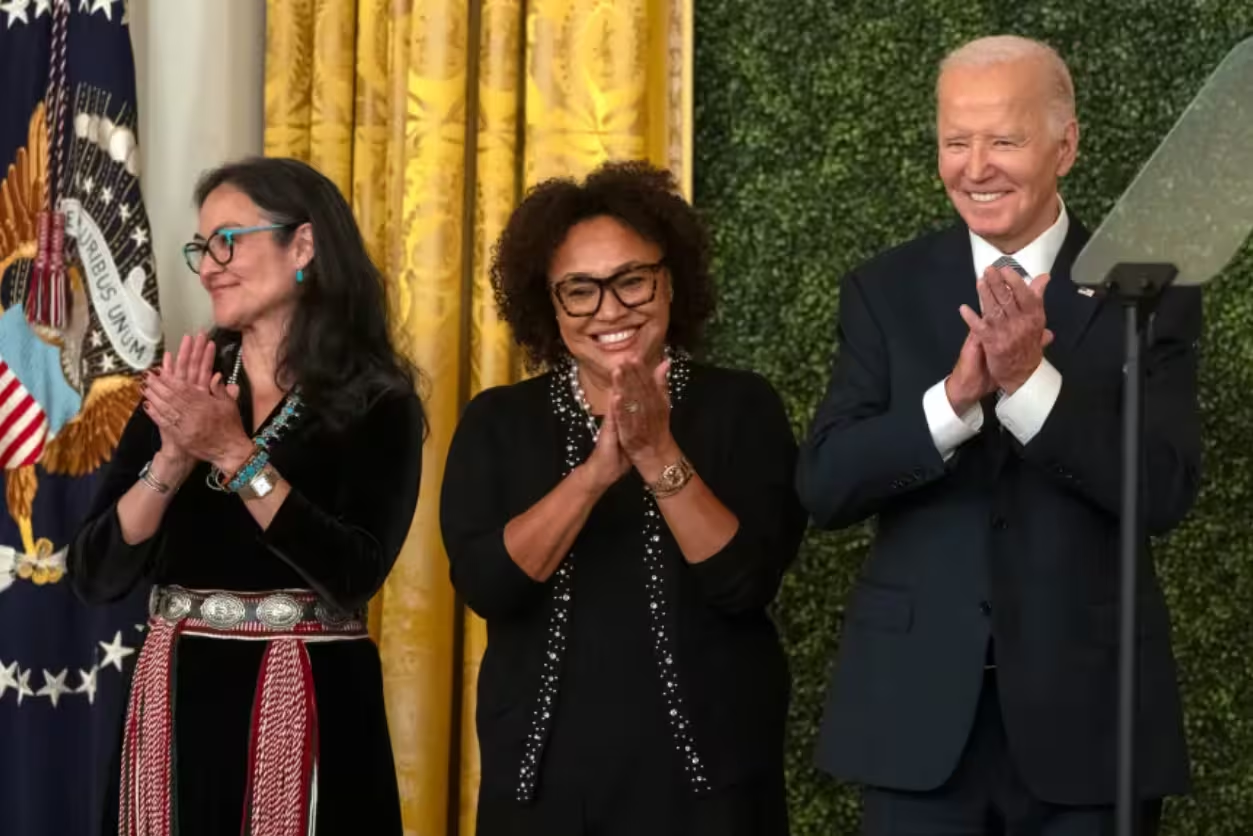
National Endowment for the Humanities Chair Shelly Lowe, from left, National Endowment for the Arts Chair Maria Rosario Jackson and President Joe Biden applaud during a National Arts and Humanities Reception at the White House in Washington, D.C., on Oct. 21, 2024. Congress approved refunding the NEA and NEH this year. (Mark Schiefelbein/AP)
When Florida Gov. Ron DeSantis terminated $32 million in state funding for more than 600 cultural
organizations, including museums, the art world reacted in shock. What surprised me wasn’t that it
happened, but that something like this hadn’t happened sooner.
The public funding museums receive is always under threat. DeSantis simply enacted what many
politicians have been trying to do for as long as the government has funded the arts. While Congress
approved refunding the National Endowment for the Arts and National Endowment for the Humanities this year, lawmakers did it despite a vocal minority that regularly opposes all government funding for the arts. Even liberal cities are no refuge. New York City Mayor Eric Adams, for example, submitted a city budget that cut all funding to museums before eventually relenting and adding it back in.
While arts defunders have not won many of these votes, they have succeeded in putting arts funding on
its heels. The trends are not good: On an inflation-adjusted basis, funding for the NEA is lower now than it
was 50 years ago.
I run Remuseum, a project housed at the Crystal Bridges of American Art to support innovation among
American art museums. As a field, museums have resisted change when it calls into question the norms
and practices they have built up over those same 50 years that have seen public funding decline. One
such norm is their attitude toward public funding. They don’t need to change; they simply deserve more.
I ran a museum and have felt the constant and acute need to raise more money. On the list of donors who
could give more to museums, the government often ranks high. “Why can’t we be more like Europe?” arts
leaders ask. While understandable, such wishes ignore one important reality: Museums face a far greater
risk that public funding will be withdrawn than increased. We need to stem the risk before we can make
the case for growth.
I don’t want to give bad ideas to any elected officials, but it’s hard to imagine an easier mark for a populist
politician than to attack museums as elitist institutions more interested in serving the social prestige and
tax deductions of their art-collecting boards than in serving the public. Such a position wouldn’t make any
friends in the arts, but it could win votes.
Faced with such risks, is it better to clutch our pearls and hope for the best, or to find new ways to
illustrate our commitment to public service and impact? The answer seems obvious to me, but many
museums have work to do if they want to earn the public support they deserve.
As a starting point, they should proudly trumpet the ways that they already use public (and
tax-subsidized) dollars to benefit everyday visitors. Accountability and transparency are reasonable
expectations in exchange for public support, yet numerous studies have illustrated the field’s general
opacity. Remuseum’s own research confirms that only 17% of museums share their number of visitors
and their consolidated financial statements — two data points they all have and certainly share with their
own boards and donors. This does not seem to be a failure of omission. I can’t tell you how often museum
leaders ask me whether the number of people they serve is really a relevant measure of their impact.
Can you imagine a library saying that its number of visitors is not relevant (or is hard to count)? Or a
homeless shelter saying that its success is better measured by the quality of its beds than by the number
of people who sleep in them? Not if it wants to attract support from the public.
Museums and their boards need to embrace a new level of transparency on reporting about their
operations and their public impact. The good news is that this doesn’t mean they need to change the way
they define themselves; they just need to embrace their own missions.
Remuseum’s research has confirmed that nearly 90% of American art museums now center the public
(i.e., taxpayers) in their mission statements. Now they need to prove that they mean it, by sharing more
information about their work, by emphasizing access over exclusivity, and by meeting the public where
they are, including asking them what and why art matters to them.
Many museums are already engaged in this work, and we will be releasing a research report this fall that
evaluates and recognizes those that are using their resources to maximize public engagement and
impact.
But even without research, we need to stop complaining about philistine politicians, which is an indulgent
pleasure but has not yet helped preserve any public funding for the arts. Museums represent the biggest,
best-endowed, collection-rich cultural organizations in most American cities and states. To gain the public support they deserve, they should embrace a new era of transparency and accountability to the public
good. I know they can do it.